![Your sump pump is still running, but the weather is dry. Maybe it keeps cycling in a crawlspace pit, or it seems to run without stopping next to a slab foundation. That usually means the pump is responding to water from another source or the system is not shutting off the way it should. A […]](https://foxpumpsystems.com/wp-content/uploads/2026/08/Why-your-sump-pump-keeps-running-when-it-hasnt-rained-img-750x420.jpg "Why your sump pump keeps running when it hasn’t rained")
Your sump pump is still running, but the weather is dry. Maybe it keeps cycling in a crawlspace pit, or it seems to run without stopping next to a slab foundation. That usually means the pump is responding to water from another source or the system is not shutting off the way it should.
A sump pump can keep running when it hasn’t rained because water may still be entering the pit, the float switch may be stuck, or discharged water may be returning to the sump. A plumbing leak or drainage issue can also keep supplying water. Start with a safe visual check. Look at the water level without reaching into the pit. See whether the float appears trapped by a pipe, cord, or debris. Listen for water returning after the pump stops. Check the visible discharge area if it can be reached without opening electrical equipment or handling contaminated water. If the pump runs continuously, cannot lower the water level, makes an unusual sound, or the cause is not obvious, call a licensed pump contractor. Continuous operation can point to a switch, pump, discharge, or system problem that needs hands-on testing.
What can make a sump pump run when there is no rain?
Rain is only one way water can reach a sump pit. In a crawlspace, water may continue moving toward the pit after the surface outside looks dry. A drainage system connected to the sump may still be collecting water from around the structure. The pump simply reacts to the level in the pit.
Another possibility is water coming from inside the property. A plumbing leak can feed a crawlspace or low area and make the sump pump seem busy for no weather-related reason. If the pit is filling with clear water while fixtures are off, that is useful information to give the technician.
The problem may also be in the pump controls. Most sump pumps rely on a float or switch that changes position as the water level rises and falls. If that part cannot move normally, the pump may stay energized even after the water has been removed.
We handle sump pump installation and repair in San Diego and can test the pump, switch, discharge path, and related components when the cause is not clear from a safe visual check.
Is the float switch stuck?
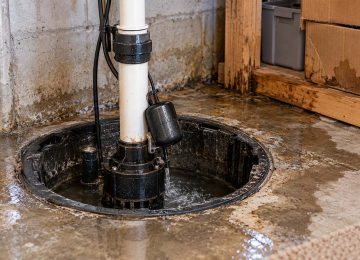
A stuck float is one of the first things worth looking at because you may be able to see the problem without touching the equipment. The float needs room to move. If it is resting against the side of the pit, caught under a pipe, or blocked by something visible, the switch may continue calling for the pump to run.
Do not put your hand into a wet sump pit while electrical equipment is connected. Do not pull on wiring or try to reposition a switch by handling electrical parts. A visual check is enough.
If the float appears free but the pump still will not shut off, the switch may need testing. That is no longer a simple homeowner check. The same is true if the pump starts only when the switch is moved by hand, stops unpredictably, or runs after the pit level has dropped below its normal shutoff point.
Could discharged water be coming back into the pit?
Yes. A sump pump is supposed to move water away from the pit through the discharge piping. If some of that water returns after the pump stops, the water level can rise again and restart the pump. You may hear water moving back toward the pit or notice the level rising soon after a cycle ends.
The check valve is one part of the discharge system that can affect this behavior. A problem in the discharge path can also reduce how effectively the pump moves water. The pump may run for a long time because the system is not getting the water out as intended.
Do not take apart a discharge line while the pump is operating. If the system is cycling repeatedly, our sump pump repair service can be used to inspect the pump and discharge setup together instead of treating the pump as an isolated part.
What can you check safely before calling?
Keep the first checks simple. You are trying to gather information, not rebuild the system.
- Look at the water level from a dry, stable position.
- Watch whether the level drops while the pump is running.
- See whether the float has visible room to move.
- Listen for water returning after the pump stops.
- Check for obvious water entering the crawlspace or sump area from a plumbing source.
Stop there if the check would require reaching into water, opening electrical components, disconnecting piping, or handling a pump that may contain sewage. Sewage contact is always on the professional side of the line. For a sewage or ejector system, use a licensed contractor rather than opening the basin or handling contaminated components.
Fox Pump Systems also provides sewage ejector pump installation and related pump services for systems that handle wastewater.
When does constant running point to repair or replacement?
If the pump is running and the water level is falling normally, the pump may simply be dealing with a continuing water source. The next question is why that water is entering the pit.
If the pump runs but the level barely changes, the pump or discharge path needs closer inspection. If the pit is already low and the pump still stays on, the switch or control is a stronger suspect. Strange sounds, repeated stopping and starting, or a motor that runs without moving water also call for service.
Repair is not always the same answer. A technician may find that a switch, check valve, discharge condition, or another serviceable part is causing the issue. In other cases, the pump itself may no longer be dependable. When replacement is the right path, we provide sump pump replacement in San Diego.
For property managers, repeated run time can also be a reason to review the system before the next water event. Planned maintenance can catch a pump that is cycling abnormally, a control that is not behaving correctly, or a discharge issue before the system is under heavier demand.
Fox Pump Systems serves San Diego County. Steve Fox has worked on sewage and sump pumps since 1986, and our contractor license is CSLB Lic #928391. Our office is at 5575 Magnatron Blvd #i, San Diego, CA 92111.
Frequently asked questions
Can a sump pump run even when the weather is dry?
Yes. A sump pit can receive water from groundwater, drainage around the structure, or another water source even when there has been no recent rain. A pump that cycles occasionally may be responding to real water. A pump that runs continuously should be checked for a float, discharge, check valve, or pump problem.
Should I unplug a sump pump that will not stop running?
Do not unplug it just to make the noise stop if water is still entering the pit. That can allow the water level to rise. If the pump is running with little or no water, or it sounds abnormal, avoid reaching into the pit and arrange service so the cause can be checked safely.
Can a stuck float make a sump pump run nonstop?
Yes. The float or switch tells the pump when to start and stop. If the float is caught, blocked, damaged, or unable to move through its normal range, the pump may continue running. A visible obstruction can sometimes be spotted safely, but electrical or mechanical switch work should be left to a qualified contractor.
Why does my sump pump shut off and start again a few seconds later?
Rapid restarting can happen when discharged water flows back toward the pit, the water level reaches the switch point again, or the switch is not operating normally. The exact cause depends on the system. Repeated short cycling is worth having checked because the pump is being asked to start much more often than normal.
When should I call Fox Pump Systems for a sump pump that keeps running?
Call when the pump does not shut off, the water level is not dropping, the pump sounds different, or a safe visual check does not reveal the problem. Fox Pump Systems serves San Diego County and provides sump pump repair and replacement. Emergency pump service is available 24/7 at 619-240-4013.
If your sump pump keeps running and you cannot identify the reason with a safe visual check, call Fox Pump Systems at 619-240-4013. Our office hours are Monday to Friday, 8am to 5pm, and emergency pump service is available 24/7.