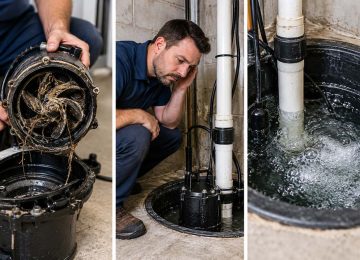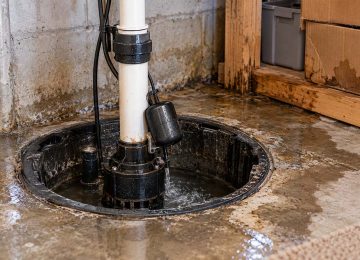
Your sump pump or sewage ejector alarm is going off, maybe in the middle of the night, and you need to know if water or sewage is about to back up. Most San Diego homes sit on a crawlspace or a slab, so the pit may be under the house or out in a yard pump station.
A sump pump alarm going off in a San Diego home usually means the water in the pit has risen above the level the pump should handle, or the system has lost power or has a control fault. Silence the alarm with the silencer on the control panel, then check whether the pump is running constantly or not at all. Silencing only quiets the horn. Whatever tripped the alarm is still there. If the alarm is on a sewage ejector, stop using the toilets and drains that feed the ejector, since the basin may already be full. Keep your hands out of the pit and leave electrical covers closed. If the water level is still rising or sewage is involved, call a licensed pump contractor right away. Fox Pump Systems provides 24/7 emergency pump service across San Diego County at 619-240-4013.
What does a sump pump alarm mean?
A sump pump alarm means the water in the pit reached a level the pump should have kept it below. Many alarms run off their own float, set higher in the pit than the float that starts the pump, and some control panels also alarm when they lose power or detect a fault in the controls.
The alarm doesn’t say which problem you have. The usual causes:
- The pump isn’t starting, from a power problem, a stuck float, a failed switch or a dead motor.
- The pump runs but can’t keep up with incoming water, or the discharge line is restricted.
- A check valve lets pumped water drain back into the pit.
- The alarm float is stuck in the up position, even though the water level is fine.
For a pump that won’t start, see our post “Sump pump not turning on: what to check before you call”. For one that won’t shut off, see “Sump pump won’t shut off: causes and what it’s damaging”.
How do I silence a sump pump alarm?
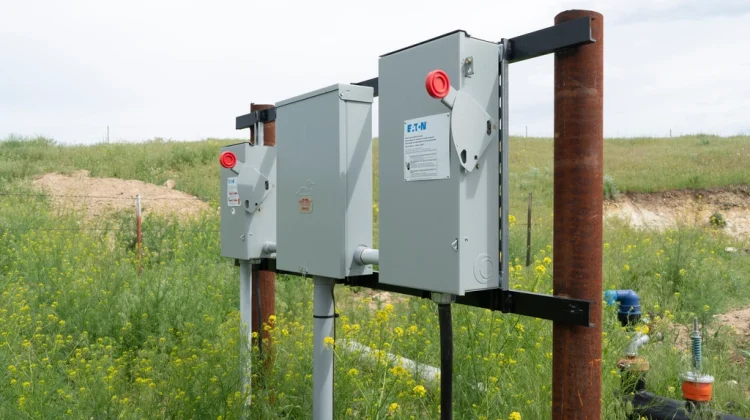
Use the silencer on the control panel. Most panels have a silence button or switch meant to quiet the alarm horn only.
On many panels a warning light stays on after the horn goes quiet, which means the alarm condition hasn’t cleared. If the horn sounds again, the problem is back.
To quiet the alarm, don’t:
- Open the control panel or pull wires to reach the horn. There are live electrical parts inside.
- Unplug or switch off the pump. A pump that’s off can’t move water.
What should I check first after the alarm goes off?
Start with what you can see and hear from a dry spot. Four checks tell you, and us, the most:
- Is the pump running or silent? Listen at the pit or pump station. Running nonstop and making no sound point to different problems.
- Is the water rising? If you can see the pit without opening anything or leaning over it, watch the water with a flashlight. Water climbing toward the top is urgent.
- Is there power? Check whether the control panel lights are on and whether the rest of the house has power.
- Is it a sump pump or a sewage ejector? A sump pit collects groundwater and drainage. A sewage ejector sits in a sealed basin, usually with a vent pipe, and handles wastewater from fixtures too low to drain to the sewer on their own.
Then stop. Keep hands and tools out of the pit. Leave electrical covers closed, and stay out of water near a plugged-in pump or in a flooded crawlspace. Don’t lift the lid on a sewage basin.
Is a sewage ejector alarm different from a sump pump alarm?
Yes, and it calls for a different response. A sewage ejector basin holds wastewater from toilets and drains, so when an ejector alarm sounds, the basin is filling with sewage and every drain you use makes the level climb.
With an ejector alarm, stop using every fixture that drains to the ejector until the system is checked. Don’t open the basin. Leave sewage and sewer gas to a professional every time.
| What to know | Sump pump alarm | Sewage ejector alarm |
|---|---|---|
| What fills the pit | Groundwater and drainage water | Wastewater from toilets and drains |
| Risk if it overflows | Water in the crawlspace or around the foundation | Sewage backing up through the lowest drain on the line |
| Can you look? | From a dry spot, without reaching in | No. Keep the basin lid closed |
If an ejector alarm is going off, that’s a call for our sewer ejector pump service.
When does a sump pump alarm need emergency service?
A sump pump alarm needs emergency service when the water is still rising or sewage is involved. Fox Pump Systems offers emergency pump service 24/7 across San Diego County.
Call right away when:
- The water keeps rising after the alarm sounds
- The alarm is on a sewage ejector, or you see or smell sewage
- The pump is silent and the pit is filling
- The breaker for the pump has tripped
Emergency or not, the homeowner’s part is short: silence the alarm at the control panel, look and listen from a dry spot, check whether the house and the panel have power, and stop using fixtures that drain to a sewage ejector.
Leave the rest to a licensed pump contractor:
- Anything inside the pit or the sewage basin
- Electrical testing and control panel work
- Float, switch, check valve and discharge repairs
- Pulling or replacing the pump
- Any contact with sewage
A single alarm that cleared, with the water back down and the pump sounding normal, can usually wait for a scheduled visit. An alarm that keeps coming back still needs a diagnosis. Start with sump pump repair, and if the pump itself is worn out or wrong for the job, sump pump replacement may be the fix.
Frequently asked questions
Why does my sump pump alarm go off and then stop?
A sump pump alarm that sounds and then stops usually means the water briefly rose past the alarm float, then dropped once the pump caught up. A float that sticks and frees itself can do the same thing. Either way, have the pump checked, since a part may be starting to fail.
Can I unplug the sump pump alarm?
We don’t recommend unplugging the sump pump alarm, because the alarm is your only warning before the pit overflows. Use the silencer on the control panel instead. If your alarm plugs into an outlet and has no silence button, leave it plugged in and call a pump contractor to find out why it’s sounding.
Why does my sump pump alarm go off when it hasn’t rained?
A sump pump alarm can go off in dry weather because other water reaches the pit too. Irrigation runoff, a plumbing leak or groundwater can fill it, and a stuck float can trip the alarm with no extra water at all. A sewage ejector alarm has nothing to do with weather.
Does a sump pump alarm that keeps going off mean I need a new pump?
Not always. A sump pump alarm that keeps going off means part of the system isn’t keeping up, and the cause can be a float, a switch, a check valve, the discharge line or the pump. Find the cause first. Replacement makes sense when the pump is worn out or wrong for the job.
Is it safe to use the toilet when the sewage ejector alarm is on?
No, hold off. When a sewage ejector alarm is on, the basin may already be full, and every flush adds wastewater with nowhere to go. Sewage can back up through the lowest drain on the ejector line. Stop using every fixture that drains to the ejector and call for emergency pump service.
How Fox Pump Systems can help
When your sump pump alarm goes off, we track down what tripped it, whether that’s the pump, a float, the discharge line or power. Steve Fox has worked on sewage and sump pumps since 1986. On a sump system the answer may be a repair, or a replacement when the pump is done. With a sewage ejector, we handle the sewage side so you stay clear of the basin. If alarms keep coming back, ask us about a planned maintenance program. Fox Pump Systems holds CSLB Lic #928391 and serves San Diego County. If your alarm is sounding now, call 619-240-4013. Emergency pump service is available 24/7. For anything that can wait, send a service request.