There’s a sewer smell coming from your sump pit. Maybe it drifts up through the floor from the crawlspace, or it hangs around a pit lid in the garage or utility area of a slab house. Some days it’s strong, other days you barely notice it.
A sewer smell from a sump pit means sewage or sewer gas is reaching a pit that should only hold groundwater, or the pit is really a sewage ejector basin that isn’t sealing or venting properly. In a San Diego County crawlspace or slab home, that odor should be checked soon.
Possible causes include laundry water discharging into the sump, a missing or poorly sealed lid, a dried-out trap nearby, stagnant water in the pit and a leaking sewer line. A homeowner can safely air out the area and look at the lid and the pipes entering the pit without touching anything. Hold off on laundry or any fixture that drains into the pit. Don’t reach into the pit or open a sealed basin. If the smell is strong or sewage is visible, leave the area and call a licensed pump contractor.
Why does my sump pit smell like sewage?
A sump pit smells like sewage when something other than groundwater is getting in, or when sewer gas has found a path into the space around the pit. Plenty of sump pits aren’t sealed against gas.
Any of these can cause the smell:
- The pit is actually a sewage ejector basin, and a worn lid seal or a vent problem is letting the smell out.
- Laundry or other drain water discharges into the sump and leaves residue that starts to smell.
- The pit lid is missing or doesn’t seal.
- A trap nearby has dried out. Floor drains and rarely used fixtures rely on water in the trap to block sewer gas, and the sump gets blamed because it’s the closest opening.
- A pit that rarely runs, say during a long dry stretch, can hold standing water and debris that turn sour.
- A sewer line under or near the house is leaking, and groundwater may carry the odor into the pit.
- A sump pump has been put to work handling sewage.
Is it a sump pit or a sewage ejector basin?
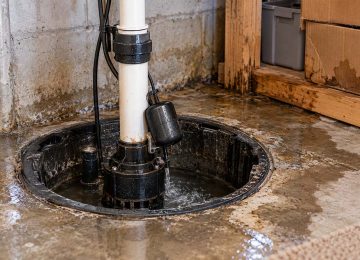
You can usually tell from a safe spot a few feet away, without opening anything. A sump pit collects groundwater. A sewage ejector basin collects waste from fixtures below the sewer line and pumps it up to the sewer.
| What to look at | Sump pit | Sewage ejector basin |
|---|---|---|
| What it holds | Groundwater from around the foundation | Waste from toilets and other fixtures |
| Lid | Often a loose or simple cover, sometimes none | A sealed lid, usually bolted down |
| Vent pipe | Usually none | A vent pipe that carries gases and odor out |
| Pipes coming in | Foundation drain lines, or none visible | Drain lines from nearby fixtures |
| Where it pumps to | Outside, away from the house | Into the sewer line |
If drain lines from a toilet or washer run into the pit, treat the pit as sewage, even if the lid looks like an ordinary sump cover. A sump pump can’t be used in place of a sewage pump. If one is handling that waste, the long-term fix is usually a pump and basin built for sewage, which falls under our sewage ejector pump installation work.
Is a sewer smell from the sump pit dangerous?
Treat the smell as a safety issue until you know where it’s coming from. Sewer gas doesn’t belong in a living space, and nobody can judge how much is present by smell alone, so even a faint smell that comes and goes is worth having checked.
If the smell is strong right now, or anyone feels unwell, stop reading. Get everyone out and make the call from outside.
While you wait for a contractor, open windows and doors near the pit or above the crawlspace. When the smell is strong, keep open flames and anything that sparks away from the pit, and don’t crawl under the house to investigate.
What can a homeowner check, and what needs a licensed pump contractor?
You can look from a safe spot and run a little water. Anything involving sewage contact belongs to a licensed pump contractor, and so does opening a sealed basin.
Safe checks, as long as the area is dry and you stay out of the pit:
- See whether the pit has a lid and whether the lid sits flat and tight.
- Note any pipe running into the pit from a washer or toilet.
- Run water in rarely used fixtures and floor drains. If the smell fades by the next day, a dry trap may have been the source.
- Look in from the crawlspace access for standing water or sewage, without crawling in.
Visible sewage, or soil soaked with it, is a job for a licensed pump contractor. The same goes for resealing an ejector basin lid, for pump, float, check valve or electrical work, and for rerouting a drain line that empties into the sump.
Don’t reach into the pit, even when the water looks clean, and never while the pump is plugged in.
If the pit is a true groundwater sump with a pump problem, that’s our sump pump repair work.
How do we find where the smell is coming from?
We confirm what kind of system it is, then work outward from the pit, because a smell near the pit doesn’t always start there.
- Confirm whether it’s a groundwater sump or a sewage ejector, and whether the pump suits what it’s handling.
- Check the lid and its seal, including where pipes and cords pass through.
- Check the vent. On a sewage basin, the vent pipe carries gases and odor out of the house, and a disconnected or blocked vent can let them into the crawlspace.
- Trace what drains into the pit, looking for laundry lines and other connections that don’t belong.
- Make sure the pump and check valve are emptying the pit.
If everything at the pit checks out, the source may be a dry trap or a drain or sewer line elsewhere, which is worth knowing before anyone sells you a new pump.
Frequently asked questions
Why does the sump pit smell come and go?
A sump pit smell that comes and goes often follows how the system gets used. Laundry water reaching the pit can smell strongest right after a load. A dry trap is different: the smell keeps getting worse until someone runs water into it. Noting when the smell shows up helps a contractor find the cause.
Can a washing machine drain into a sump pit?
We don’t recommend it, because laundry water is a common cause of sump odor: lint and organic residue settle in a pit built for groundwater and start to smell. If your washer drains into the sump, have a pump contractor look at rerouting it.
Does a sump pit need a sealed lid?
A sealed lid helps when odor is a problem, since it keeps pit smells out of the crawlspace, but not every sump pit has one, and a lid alone won’t fix the source of a sewer smell. Sewage ejector basins are different: they come with a sealed lid, and a homeowner shouldn’t open it.
Should I stop using water fixtures if the sump pit smells like sewage?
Stop using any fixture that drains into the pit until it’s been checked. A groundwater sump with nothing connected to it isn’t affected. On a sewage ejector, though, every flush or load of laundry sends more waste into the basin, and a pump that isn’t keeping up can let it back up.
Do I need a new pump if my sump pit smells?
Not necessarily. Many sump pit odors come from something other than the pump, such as a lid that doesn’t seal or drain water going where it shouldn’t. The pump is the problem when it isn’t emptying the pit. A pump is also the problem when it’s a sump pump handling sewage it was never built for.
How Fox Pump Systems can help
Fox Pump Systems is a licensed pump specialty contractor, CSLB Lic #928391, and owner Steve Fox has worked on sewage and sump pumps since 1986. When you call us about a sewer smell from your sump pit, we confirm what kind of system you have, then trace the odor to its source, whether that’s the lid, the vent, a drain line or the pump itself. If your pit is a sewage basin, that’s our sewer ejector pump service. If a sump pump has been handling waste, we’ll explain what a proper sewage setup involves. We work across San Diego County. Call 619-240-4013 or send a service request. Emergency pump service is available 24/7.